


HOW OLD IS THE EARTH?
The rocks tell a story. The Creator explains it
Few scientific questions feel as emotionally charged as this one. For many, the age of the earth shapes how they read Scripture, how they view science, and how they understand human history. Some are convinced the planet must be billions of years old. Others believe the biblical timeline points to thousands. Beneath the debate lies a deeper issue: which framework best explains the evidence we see?
For this page, we will explore several arguments often raised by young earth researchers and critics of deep time models. The goal is not to dismiss science, but to look carefully at areas that raise serious questions. In the end, timelines matter less than the character of the Creator. Still, understanding the discussion helps us think clearly and honestly.


Petrified Trees Through Multiple Rock Layers
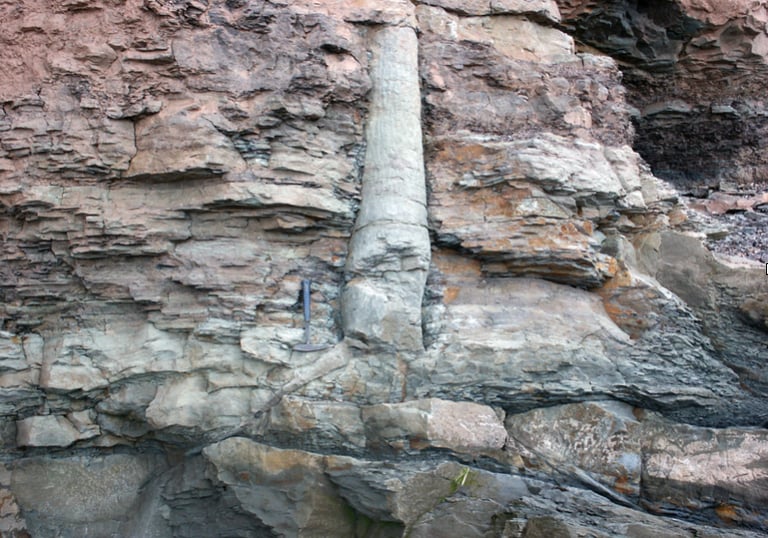
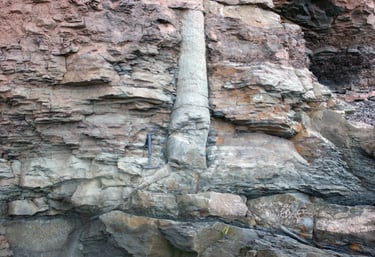
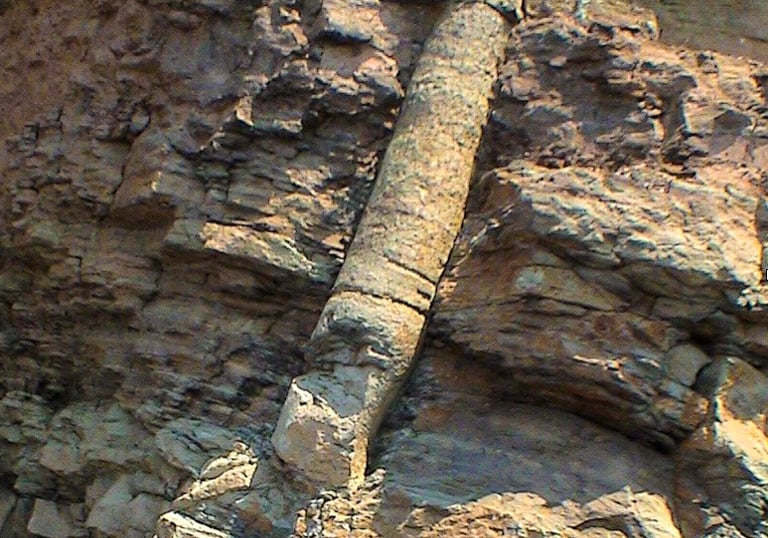
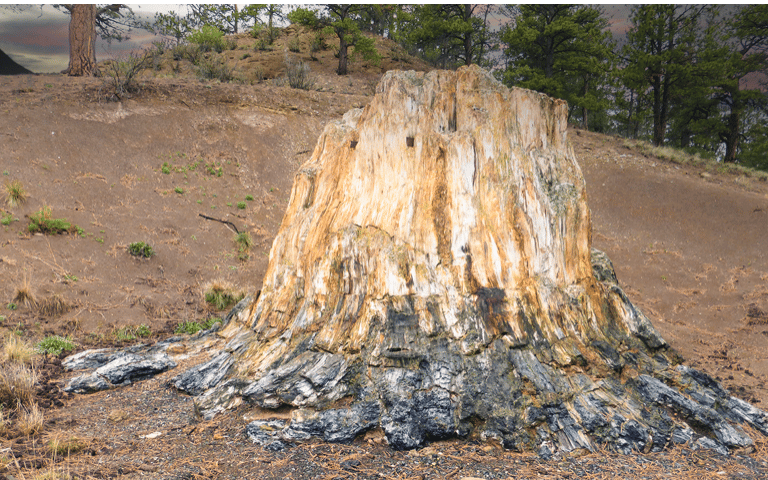
One of the most discussed anomalies involves so-called “polystrate fossils,” especially fossilized tree trunks that extend vertically through several sedimentary layers. According to the conventional model, each layer often represents thousands or millions of years of slow deposition. Yet some trees pass straight through multiple strata without decaying.
One of the most discussed anomalies involves so-called “polystrate fossils,” especially fossilized tree trunks that extend vertically through several sedimentary layers. According to the conventional model, each layer often represents thousands or millions of years of slow deposition. Yet some trees pass straight through multiple strata without decaying.
If those layers formed slowly over vast time spans, the exposed upper portion of the tree should have rotted away long before additional layers buried it. Young earth researchers argue that such formations suggest rapid burial in a short time, possibly during catastrophic flooding.
A striking modern example often cited comes from Mount St. Helens in 1980. After the eruption, thousands of trees were blown into Spirit Lake. Many became waterlogged and sank vertically, root end down. Over time, sediment accumulated around them. Some researchers argue this provides a small-scale model for how vertical fossil trees could form rapidly, rather than over millions of years.
The key question is not whether trees can fossilize. They can. The question is how quickly large sediment layers were deposited. Catastrophic events change landscapes in hours, not ages.
The “Small Canyon” Formed in One Day
Also at Mount St. Helens, a mudflow in 1982 carved a canyon up to 40 meters deep in a single day. It became known as the “Little Grand Canyon.” Layers resembling those in larger canyons were exposed quickly by rushing water.
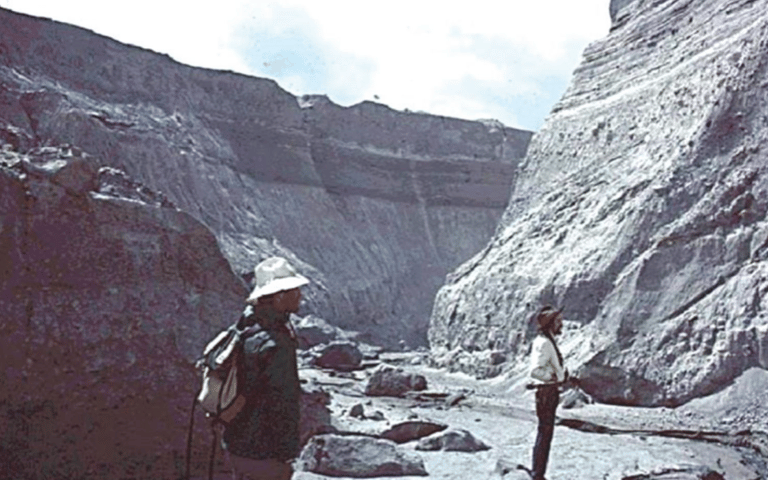
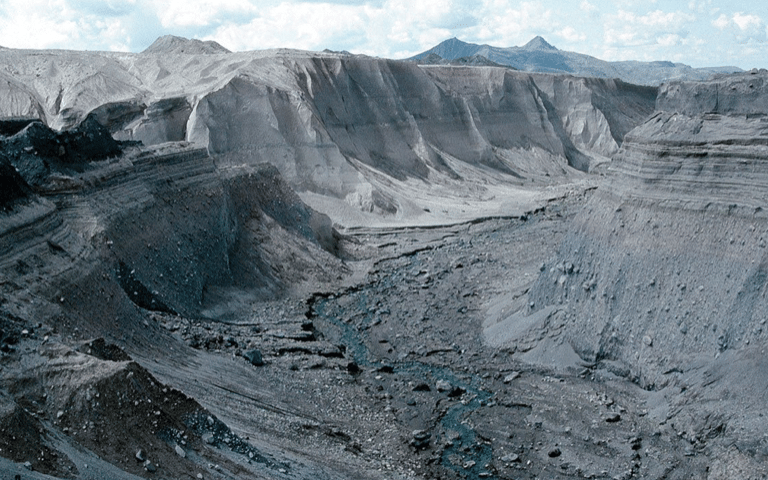
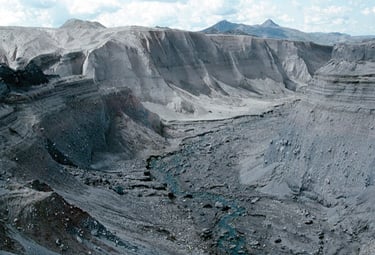
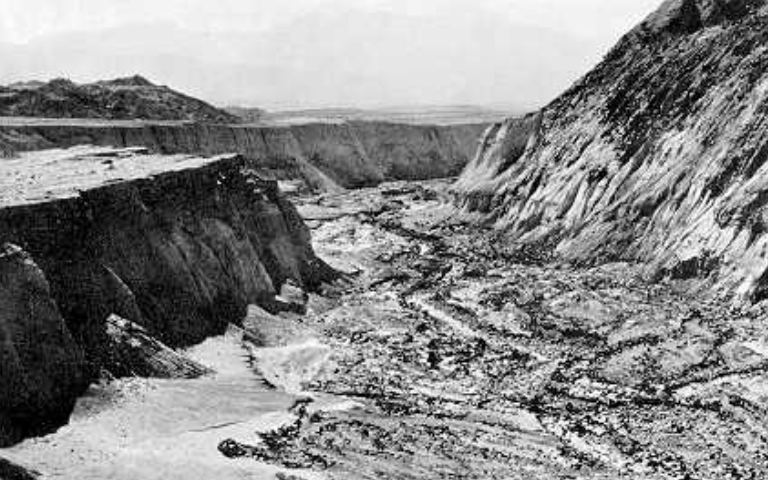
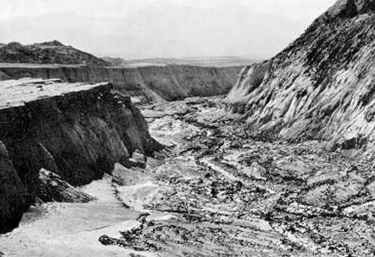
Geologists examine the canyon formed by a 1982 layer, revealing layered deposits from 1980 and 1982 eruptions.
This event shows evidence that large-scale geological formations can occur far more rapidly than commonly assumed. While the Grand Canyon in Grand Canyon is widely dated as millions of years old, the St. Helens example demonstrates that powerful water flow can carve deep, layered structures extremely fast under the right conditions.
The argument is not that every canyon formed in one day, but that the assumption of slow, uniform erosion may not always hold. Catastrophe must be considered seriously in geological interpretation.
Fossils of Sea Creatures on High Mountains
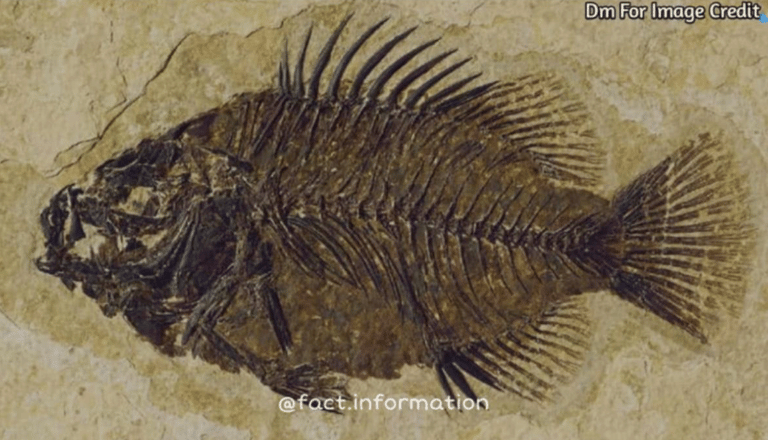
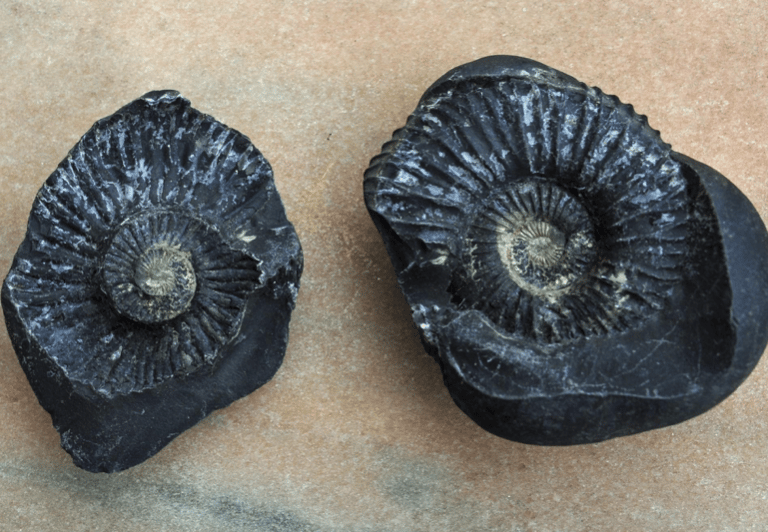
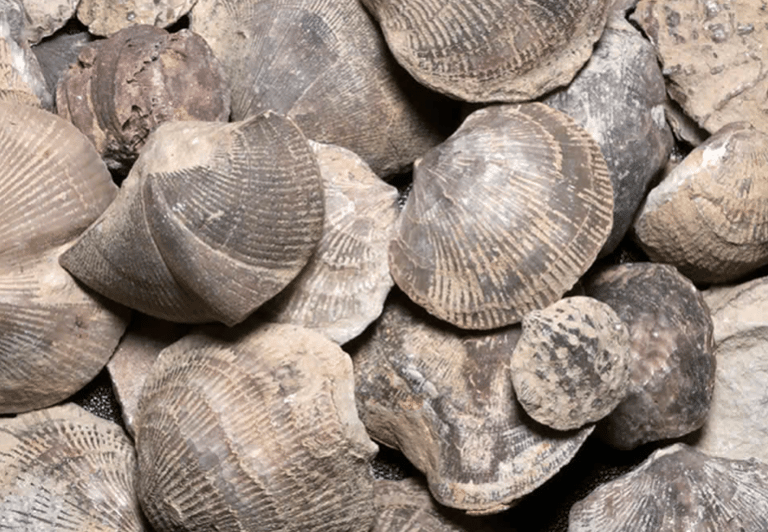
Marine fossils have been found on the world’s highest mountains, including the Himalayas and the Andes. Shellfish and marine organisms appear embedded in rock thousands of meters above sea level.
Mainstream geology explains this through plate tectonics and uplift over immense timescales. Yet there are researchers, who argue that widespread marine fossils on continents suggest massive water coverage in the past. They often connect this to a global flood event described in Genesis.
The presence of billions of marine fossils across continents could suggests that there was there a time when vast portions of the earth were submerged rapidly. Catastrophic flood geology proposes that large sediment layers containing marine life were deposited quickly during such an event.
Dinosaur Mass Graves
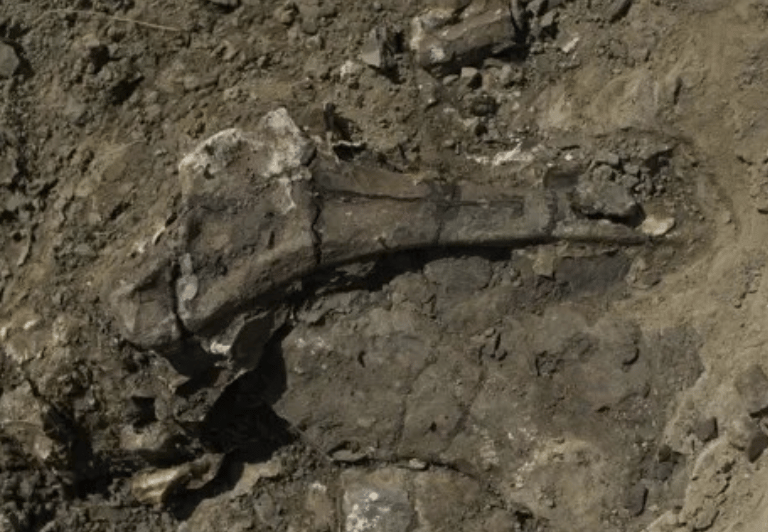
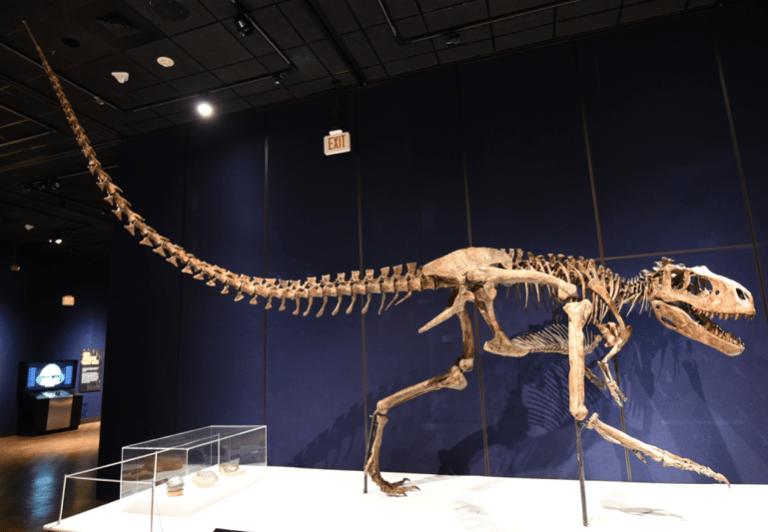
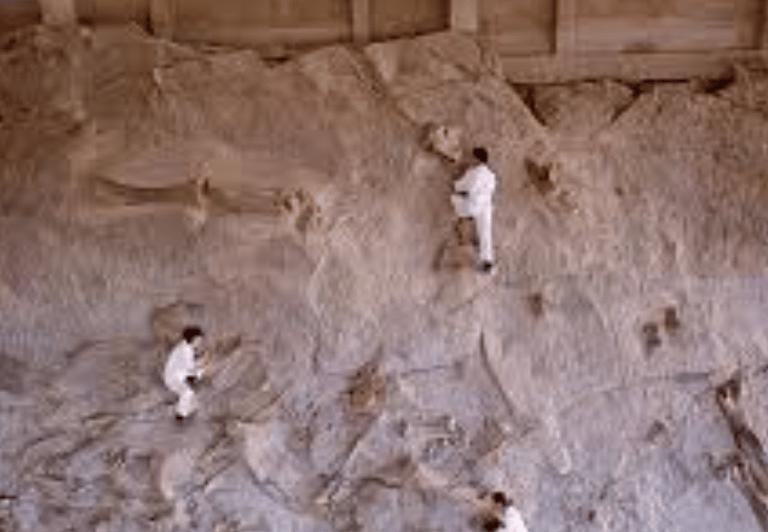
Large dinosaur bone beds have been discovered in places like Alberta, Montana, and China. Some sites contain thousands of bones packed tightly together.
These mass graves found all over the world suggest seasonal droughts or repeated flooding events over long periods. There are researchers who counter that the scale and density of these bone beds indicate sudden, catastrophic burial. Rapid burial is also necessary for fossilization itself. Dead animals exposed on the surface typically decay or are scavenged.
If entire herds were buried quickly, perhaps by massive water movement, this would align with a flood model rather than slow accumulation across ages.
Soft Tissue in Dinosaur Fossils
In recent decades, soft tissue structures in dinosaur bones have sparked intense discussion among paleontologists and chemists alike. Flexible vessel-like formations, possible red blood cell shapes, collagen fragments, and other protein remnants were identified in several specimens, most famously in work led by Mary Schweitzer. What made these findings remarkable was not merely their existence, but their apparent pliability and biochemical signatures.
Under conventional timelines, dinosaur fossils are dated at roughly sixty-five to one hundred million years old. According to standard decay expectations, original organic material should not survive anywhere near that length of time. Proteins gradually break down through chemical reactions such as hydrolysis and oxidation. Even under favourable conditions, laboratory studies suggest measurable biological structures degrade far sooner than tens of millions of years.
The presence of identifiable proteins and flexible microstructures aligns more naturally with a much younger burial age. If original biological material remains, they contend, the time span involved may be far shorter than commonly assumed.
The discussion remains active and complex. What cannot be denied is that such discoveries complicate simple narratives about fossilisation and decay. Whether one adopts preservation chemistry within deep time or a compressed timeline of earth history, the presence of soft tissue invites careful reexamination of long-held assumptions about how long biological materials can truly endure.
Carbon-14 in Coal and Diamonds
Carbon-14 is widely used to date once-living material because it decays at a measurable and predictable rate. With a half-life of about 5,730 years, its quantity decreases steadily over time. After roughly 100,000 years, the remaining amount should be so small that it becomes virtually undetectable. For this reason, carbon-14 dating is generally considered unsuitable for materials believed to be millions of years old.
According to the conventional geological timescale, coal deposits are often dated to hundreds of millions of years, and diamonds are assigned ages that reach into the billions. Within that framework, measurable carbon-14 should no longer exist in such materials.
However, laboratory measurements in several cases have detected trace amounts of carbon-14 in coal samples and even in diamonds. These findings are seen as evidence that the materials may be far younger than assumed. If carbon-14 remains present in measurable quantities, the time involved cannot extend into vast geological ages.
The presence of carbon-14 in materials assigned great age remains a point of active discussion, and its significance depends largely on which interpretive model one considers more coherent.
Rapid Formation of Geological Features
In the modern era, we have directly observed how quickly landscapes can change when powerful natural forces are unleashed. Volcanic eruptions, tsunamis, earthquakes, and massive floods have reshaped entire regions within hours or days. What had previously been assumed to require long periods of time can, under catastrophic conditions, occur with striking speed.
The eruption of Mount St. Helens in 1980 became an unexpected field laboratory for this very discussion. In the aftermath, layers of sediment were deposited rapidly by ash clouds, mudflows, and water surges. These layers hardened into structures that closely resembled sedimentary strata traditionally interpreted as products of long ages. In 1982, a massive mudflow carved a deep canyon through newly deposited material in a single day, exposing layered walls that visually paralleled much larger canyon systems. Thousands of trees were stripped, transported, and buried upright in sediment, creating conditions similar to fossilized vertical trunks found elsewhere in the geological record.
Those who question long-age assumptions point to these events as demonstrations that large-scale geological structures do not always require immense timespans. Rapid sedimentation, sorting of materials, and significant erosion can occur swiftly when water volume and force reach catastrophic levels. Observed processes challenge the idea that slow, uniform change must be the default explanation for layered rock formations.
The broader argument is not that every formation formed overnight. Rather, it is that modern catastrophic events reveal how powerful short-term processes can be. If dramatic transformation can occur within days under extreme conditions, then ancient formations might also reflect episodes of sudden upheaval rather than only gradual accumulation. This perspective invites reconsideration of how much of earth’s visible structure may record moments of intense geological activity rather than quiet, incremental change stretched across vast ages.
The Flood as Historical Framework
The biblical account in Genesis describes a worldwide flood marked by violent upheaval, deep waters covering the land, and the large-scale destruction of living creatures. The text speaks of “the fountains of the great deep” breaking open and the windows of heaven pouring out rain, language that suggests geological as well as meteorological catastrophe. Within a young earth framework, this event is understood as a global turning point in earth’s physical history rather than a local disaster.
The flood could explain historically why we see so many fossil-bearing rock layers as records all over the world. Rather than representing slow accumulation over immense ages, these layers could indicate massive sediment deposits that have been laid down rapidly as waters surged across continents. Under this model, fossil order reflects ecological zonation rather than evolutionary progression. Marine organisms would naturally be buried first as ocean basins were disturbed, followed by coastal creatures, then lowland animals, and finally those inhabiting higher terrain. Sorting by habitat, mobility, and body density would influence burial patterns as waters rose and currents shifted.
Interestingly, the Genesis account is not the only ancient narrative describing such an event. Flood traditions appear in multiple early civilisations, often including the preservation of a small remnant in a vessel. The Mesopotamian Epic of Epic of Gilgamesh recounts a man warned to build a large boat to survive a devastating flood. Similar motifs appear in other cultures across Asia and the Americas. These widespread accounts are cultural memories of a real catastrophic event preserved in varying forms across generations.
The discussion ultimately turns on which historical framework best accounts for the full range of evidence. The flood model remains a comprehensive alternative that continues to be developed and debated, inviting serious engagement rather than quick dismissal.
A Final Perspective
The age of the earth is presented today as settled fact, yet when one looks closely, many layers of uncertainty remain. The dating methods rest on assumptions about initial conditions, decay rates, and closed systems. Catastrophic events are often interpreted within a gradual framework. Evidence is filtered through prior commitments. For Christians who take Scripture seriously, open up the debate with serious interrogations. There are more unanswered questions within an old earth model than many are willing to admit.
When we examine vertical fossil trees, mass dinosaur graves, soft tissue discoveries, marine fossils on mountain peaks, and rapid geological formation in our own lifetime, we do not see simple confirmation of vast ages, but cracks in a narrative that is presented as unassailable. We see room for a different reading of earth’s history, one that aligns more naturally with a global catastrophe and a shorter timeline.
For believers, this is not merely a scientific preference. The biblical account is not poetic suggestion detached from reality. It presents real events rooted in space and time. If Scripture speaks clearly about creation and flood, then those claims deserve the same intellectual seriousness we grant to laboratory measurements. The authority of God’s Word cannot be quietly reinterpreted whenever prevailing models shift.
Yet even here, the discussion must rise above sediment layers and fossil counts. Beneath every geological argument lies a deeper question about origin, intention, and meaning. The order woven into physical law, the intricate engineering of living cells, the mathematical harmony of the cosmos, and the moral awareness written into human conscience all point beyond blind mechanism. Precision, beauty, and coherence suggest mind rather than accident.
Ultimately, the question is not simply how long the earth has existed. The greater question concerns who called it into being and why. A timeline cannot explain purpose. Erosion rates cannot account for love, conscience, or worship. The most profound issue has never been the ticking of cosmic years, but the reality of the One who stands behind them.
Further Reading and Resources
(For those who want to think more deeply about the age of the earth and how faith and science interact)
Science and Geological Time
The Planetary Society — Summary of current scientific understanding that the Earth formed about 4.54 billion years ago, based on radiometric dating and astrophysical evidence.
Christian Thought on Origins and Revelation
Augustine of Hippo — In Confessions and On the Literal Meaning of Genesis, Augustine argued that Scripture sometimes speaks in phenomenological terms and that the wisdom of God transcends human measurement of time.
John Polkinghorne — Wrote extensively on how Christian faith can engage scientific accounts of the universe without fear, emphasizing that science and theology answer different kinds of questions.
Alvin Plantinga — In works like Where the Conflict Really Lies, Plantinga argues that apparent conflict between science and faith is often overstated and that philosophy plays a crucial role in interpreting scientific claims.
Francis Collins — In The Language of God, Collins reflects on how a deeply held Christian faith and a strong confidence in scientific evidence can coexist.
Exploration of Catastrophism and Alternative Geological Models
Answers in Genesis — Presents detailed young-earth interpretations, including how fossil layers, geological strata, and radiometric methods are understood within a framework of global catastrophe and a young earth.
Field observations such as rapid canyon formation at Mount St. Helens remind us that catastrophic processes can produce layered geology quickly, challenging assumptions that slow and uniform change is the only model for interpreting rock layers.
Biblical and Theological Reflection
C. S. Lewis — While not writing specifically on Earth’s age, Lewis’ Mere Christianity and Miracles explore how Christians can hold essential truths of faith in dialogue with scientific insight, without reducing spiritual reality to empirical data.
Martina Pook, Surprised By Purpose — Though not focused on Earth’s age, this book emphasizes that scientific description and spiritual meaning are distinct domains — one cannot reduce the whole of reality to scientific explanation alone, whether in love, morality, or origins.
Online Resources for Continued Study
BioLogos — Encourages constructive dialogue between evolutionary science and Christian faith.
Christian Classics Ethereal Library — Open access to historical theological texts that explore how Christians have historically engaged questions of creation and Scripture.
Reasonable Faith — Philosophical and evidential resources for thinking seriously about origins, meaning, and rational belief.
Points of Reflection
The discussion on “How old is the earth?” is not merely about numbers. It invites careful examination of evidence, assumptions, worldview presuppositions, and the relationship between sacred text and scientific methodology. Whether one leans toward deep time or a shorter timeline, the deeper question has always been the same: What kind of God is behind the world we see, and what does His revelation tell us about reality, purpose, and truth?


Quiet Truths was founded in 2017 as Truth Talks on the Gold Coast, Australia, and is now based in Queenstown, New Zealand.
© 2026 Quiet Truths. All rights reserved
FAITHFUL SAINTS
WHY IS CHRISTIANITY DIFFERENT?
ARE SPIRITUAL EXPERIENCES EQUAL?
WHAT IS HEAVEN LIKE?