


CORRY TEN BOOM
Triumph of Grace in the Darkest Hour
Courage, Forgiveness, and the Triumph of Grace in the Darkest Hour
In the shadow of Nazi occupation, Corrie ten Boom became a vessel of extraordinary courage, proving that no darkness can extinguish the light of Christ when the Spirit sustains the heart.
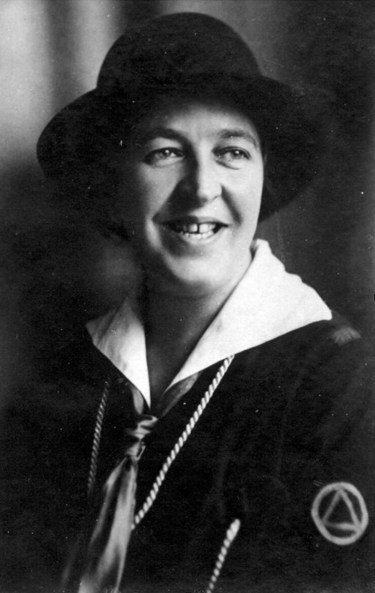
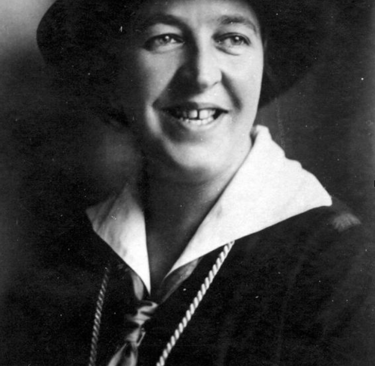
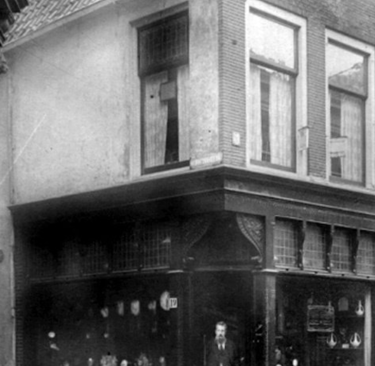
She was born on 15 April 1892 in Haarlem, the Netherlands, into a devout Dutch Reformed family whose daily life revolved around Scripture, prayer, and quiet hospitality. Their home stood above the family watch shop, and beneath the steady rhythm of ticking clocks, something far more eternal was being shaped. Corrie’s father, Casper ten Boom, loved the Jewish people deeply and spoke often of God’s covenant faithfulness. Compassion was not an abstract virtue in that household. It was practiced.
Corrie trained as a watchmaker and became the first licensed female watchmaker in the Netherlands. Precision and patience marked her craft, yet her true preparation lay elsewhere. Long before the war, she led Bible studies, worked with children with disabilities, and opened her home to those in need. When the Second World War engulfed Europe and the Nazi regime began deporting Dutch Jews, the ten Boom family did not hesitate. Faith moved into action.


Corry Ten Boom Quotes
On Trust and God’s Care
“There is no pit so deep that God’s love is not deeper still.”
On Worry and Fear
“Worry does not empty tomorrow of its sorrow, it empties today of its strength.”
On God’s Guidance
“Never be afraid to trust an unknown future to a known God.”
On Forgiveness
“Forgiveness is an act of the will, and the will can function regardless of the temperature of the heart.”
On Listening to God
“When a train goes through a tunnel and it gets dark, you don’t throw away the ticket and jump off. You sit still and trust the engineer.”
The Hiding Place
As persecution intensified, the ten Boom home became a sanctuary. With the help of members of the Dutch resistance, a hidden room was built behind a false wall in Corrie’s bedroom. Jewish men, women, and children found refuge there. Ration cards were gathered illegally. Doors opened quietly. Lives were shielded.
For over two years, the family harbored fugitives. Eventually, in February 1944, betrayal came. The Gestapo raided the house. Corrie, her sister Betsie, and their father were arrested. Casper ten Boom died ten days later in prison at the age of eighty four. His last words declared that it was an honor to give his life for God’s ancient people.
Corrie and Betsie were sent to the Ravensbrück concentration camp in Germany. The conditions were brutal. Hunger gnawed, disease spread, and cruelty reigned. Yet even there, something astonishing unfolded. In the women’s barracks, through a smuggled Bible, the sisters held secret worship services. Prisoners from many nations gathered around the Word of God. Where lice infested the bunks and guards avoided entering, Scripture was read freely. The Spirit of God moved in a place designed for despair.

A Forgiveness That Defied Human Strength
Betsie died in Ravensbrück in December 1944. Corrie later testified that her sister’s final words spoke of forgiveness and of a house after the war where former prisoners and former collaborators would learn that Christ heals every wound. Corrie was released days later through what she later discovered had been a clerical error. Within a week, women her age in the camp were sent to the gas chambers.
After the war, Corrie established rehabilitation centers for survivors and for those who had collaborated with the Nazis. Forgiveness was not theory to her. It was obedience. In 1947, while speaking in Germany, she encountered a former Ravensbrück guard who approached her, asking for forgiveness. Her hand froze in midair. Every memory surged. In that moment she prayed silently for strength beyond her own. She later wrote that forgiveness is an act of the will empowered by God. When she extended her hand, she experienced what she described as a flood of divine love that was not her own.
This stands as one of the most compelling testimonies of the twentieth century. Human resolve alone could not have produced such grace. The Holy Spirit accomplished what natural instinct resists. Corrie never glorified herself. She spoke of weakness met by divine sufficiency.
A Global Ministry of Hope
In the decades that followed, Corrie traveled to more than sixty countries proclaiming that there is no pit so deep that God’s love is deeper still. She warned against bitterness, urged believers toward forgiveness, and testified that Christ remains faithful even when circumstances collapse. Her message carried authority because it had been tested in suffering.
In 1967, she was honored by Yad Vashem in Israel as one of the Righteous Among the Nations for her family’s rescue of Jews during the Holocaust. The recognition acknowledged bravery, yet Corrie consistently redirected attention to God’s sustaining power. She understood herself as a simple watchmaker’s daughter carried by grace.
She died on 15 April 1983, on her ninety first birthday. In Jewish tradition, dying on one’s birthday is considered a special blessing. Her life remains a luminous witness that obedience, even when costly, becomes a channel through which God reveals His steadfast mercy.
What Stood Out
What distinguished Corrie ten Boom was not fearless temperament or heroic ambition, but yielded availability. She did not set out to become a symbol of courage. She opened her home because Scripture shaped her conscience. She forgave because Christ had forgiven her. She endured because the Spirit strengthened her in weakness.
Her story demonstrates that holiness can live above a watch shop, that worship can rise from a prison barrack, and that forgiveness can overcome hatred when divine grace enters the human heart.
Books by Corrie ten Boom
The Hiding Place
Tramp for the Lord
In My Father’s House
Not Good If Detached
The Path of Suffering
Biographies and Historical Studies
Pamela Rosewell Moore, Corrie: The Life Story of Corrie ten Boom
Carole C. Carlson, Corrie ten Boom: Her Life, Her Faith
John and Elizabeth Sherrill (co-authors of The Hiding Place)
Reliable References
Yad Vashem
Recognition as Righteous Among the Nations
https://www.yadvashem.orgCorrie ten Boom House
Official museum and historical archives
https://www.corrietenboom.comUnited States Holocaust Memorial Museum
Historical documentation of Ravensbrück and Dutch resistance
https://www.ushmm.orgChristian Classics Ethereal Library
Access to some of her writings
https://www.ccel.org
Quiet Truths was founded in 2017 as Truth Talks on the Gold Coast, Australia, and is now based in Queenstown, New Zealand.
© 2026 Quiet Truths. All rights reserved
FAITHFUL SAINTS
WHY IS CHRISTIANITY DIFFERENT?
ARE SPIRITUAL EXPERIENCES EQUAL?
WHAT IS HEAVEN LIKE?