


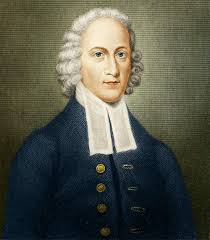
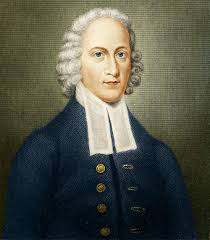
JONATHAN EDWARDS
A Soul Shaped by Devotion
A life awakened to the nearness of God
Jonathan Edwards lived with a quiet, steady conviction that the world around us isn’t silent, it is completely alive with the presence and beauty of God. To him, every passing moment, every detail of nature, and every stir of the human heart was part of a larger, unfolding story, gracefully drawing everything back to its Creator.
Born in 1703 in colonial America, Edwards possessed a rare blend of deep intellect and childlike wonder. While the rest of the world rushed by, he was someone who lingered. He paid attention to the breathtaking beauty of creation and felt the quiet weight of eternity pressing into ordinary, everyday moments. From his earliest years, he didn't just want to know about God; he wanted to walk closely with Him, living a life rooted in sincerity, awe, and genuine devotion.


Words From Jonathan Edwards
“God is glorified not only in His glory being seen, but in its being rejoiced in.”
“The enjoyment of God is the only happiness with which our souls can be satisfied.”
“Resolved, to live with all my might, while I do live.”
“So that, thus it is with us, when we are most secure, our ruin is nearest.”
Walking in the Light of Divine Beauty
For Edwards, faith was never a rigid chore; it was a living joy. He saw the beauty of a holy life as something radiant and real, far more captivating than anything the world could promise. To him, creation was constantly whispering of a grander order and a love beyond measure.
A sunrise was never just a sunrise. It was a signpost, a gentle reminder, and an invitation to look up. He captured this beautifully when he wrote:
"God is glorified not only in His glory being seen, but in its being rejoiced in."
This was the very heartbeat of his life. Finding joy in God wasn't an extra credit assignment for the soul; it was the exact purpose for which we were created.
A Voice in the Wilderness
Living in an era of spiritual complacency, Edwards became a voice urging people to return to what truly mattered. His preaching during the Great Awakening carried a unique mix of urgency and hope. He wasn't just offering warnings; he was extending an invitation to come home, to be renewed, and to come alive.
While his most famous sermon, "Sinners in the Hands of an Angry God," is often remembered for its intense imagery, underneath that intensity was a pastor's deep, aching desire that no one would miss out on the mercy available to them. He was acutely aware of how fragile life is, once writing:
"So that, thus it is with us, when we are most secure, our ruin is nearest."
Yet, even his starkest warnings weren't meant to paralyze people with fear. They were meant to wake them up, pointing them toward a life completely transformed by God.
A Soul Shaped by Devotion
Edwards didn't believe in a part-time faith or a Sunday-only routine. True faith was meant to rewrite a person from the inside out, shaping every thought, sparking the imagination, and steering daily life. Walking with God meant allowing yourself to be constantly reshaped by truth, until your heart naturally began to love and delight in what is genuinely good.
He always maintained that real faith isn't about putting on an outward show. It’s an internal awakening, a heart coming fully alive to the beauty and quiet presence of God.
A Voice That Still Echoes
Jonathan Edwards passed away in 1758, but his life's work still speaks to us today. It remains a gentle but persistent call to live with our eyes wide open, to see the world as a place alive with divine glory, and to follow God with a whole and undivided heart.
Centuries later, his legacy leaves us with a profound question to carry into our own lives:
What would it actually look like to walk fully alive in God's presence, not just in theory, but today, and every single day?
Reference & Further Reading
Jonathan Edwards left behind a wide body of sermons, theological writings, and personal reflections that continue to shape Christian thought and spiritual literature.
Major Works by Jonathan Edwards
Religious Affections (1746) — A foundational exploration of what genuine spiritual experience looks like, and how true faith is expressed in the heart and life.
Freedom of the Will (1754) — A philosophical and theological work on human choice, responsibility, and divine sovereignty.
Sinners in the Hands of an Angry God (1741) — His most famous sermon, preached during the Great Awakening, calling listeners to urgent repentance and faith.
A Treatise Concerning Religious Affections — Often published under variations of the same title, emphasizing the difference between emotional enthusiasm and true spiritual transformation.
The Life of David Brainerd (1749) — A deeply influential biography of missionary David Brainerd, reflecting Edwards’ own passion for devotion and spiritual intensity.
Original Sin (posthumously published, 1758) — A detailed theological argument on human nature and the need for divine grace.
Collected Works
The Works of Jonathan Edwards (Banner of Truth Trust edition) — A comprehensive multi-volume collection of sermons, writings, and treatises.
The Jonathan Edwards Center at Yale University — A leading academic archive preserving manuscripts, digital editions, and research materials.
Reference & Study Resources
Yale University – Jonathan Edwards Center & Online Archive
Banner of Truth Trust – Classical Puritan and Reformed publications, including Edwards’ works
Biographical studies of Edwards’ life and influence within the Great Awakening
Academic commentaries on Religious Affections and Freedom of the Will


Quiet Truths was founded in 2017 as Truth Talks on the Gold Coast, Australia, and is now based in Queenstown, New Zealand.
© 2026 Quiet Truths. All rights reserved
FAITHFUL SAINTS
WHY IS CHRISTIANITY DIFFERENT?
ARE SPIRITUAL EXPERIENCES EQUAL?
WHAT IS HEAVEN LIKE?